Category Archives: screenwriting
Ross Marches into 2026
AFF Vibes and Continued Inspiration
My last blog was about my experience attending the Austin Film Festival in Austin, Texas. The good vibes and inspiration carried over into 2026. I’ve gotten to know some people I briefly met at AFF. Two of them I met at an ISA networking mixer (International Screenwriters Association). Gotta keep attending mixers!
“You’re a Script Reader!”
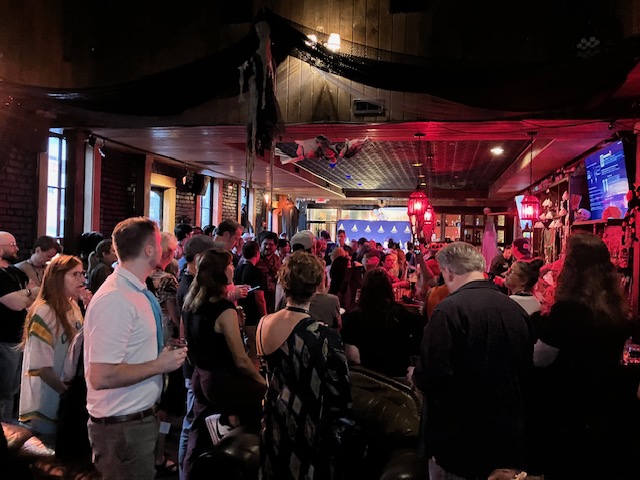
During the holidays, an industry friend, Todd Ocvirk, invited me to attend a holiday party hosted by FilmQuest Film Festival. Although their festival takes place in Utah, they throw mixers in LA to grow their community. Eventually, I hung out with Todd and his associates.
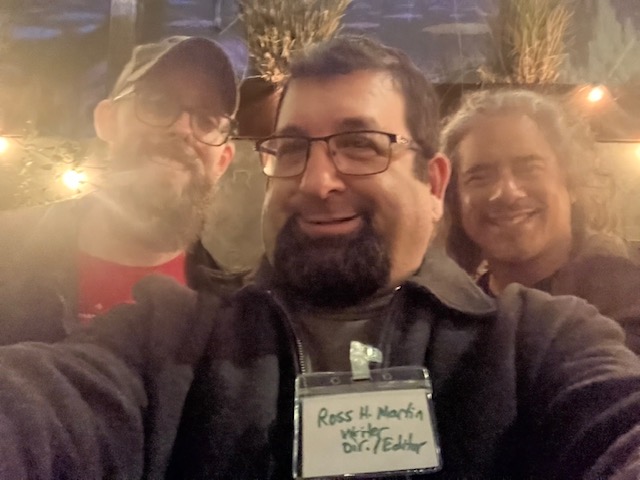
That’s Todd on the right. 👋🏻
At one point during the party, I was roaming around on my own. We were all wearing stickers with our names on them. Suddenly, someone called out, “Ross!” I spoke with this man and woman about my writing, directing and video editing. As I’m about to exit the chat, I handed Jim Cirile my business card. He reads the hyphenates and exclaims, “You’re a script reader!” Jim runs Coverage Ink with a whole staff of readers.
So, in January I tried out by reading a screenplay and giving notes (for free.) The company liked my notes and now I’m working for them on a freelance basis.
More of the Notion: You Never Know
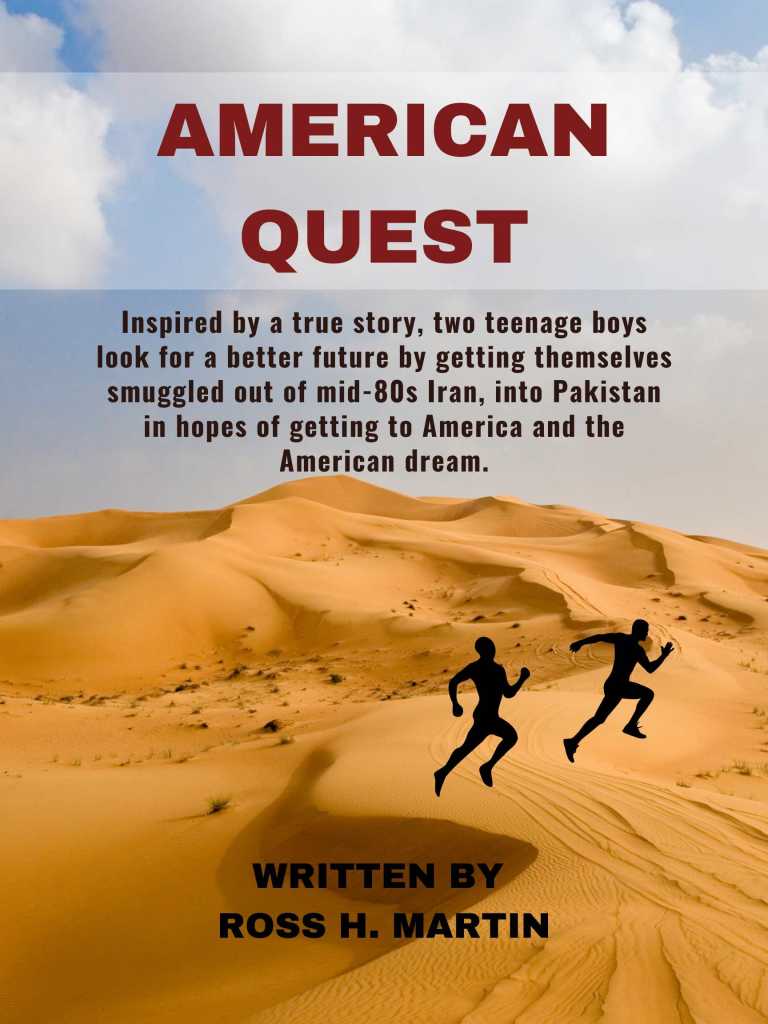
Although I’m branding myself as a science fiction writer, you just never know when one of your scripts might be very timely. Many years ago, I wrote a screenplay inspired by two Iranian male teenagers looking to get themselves smuggled out of Iran into Pakistan in hopes of getting to America and the American dream. It’s called “American Quest.”
I threw this poster together with a logline. I know it should be more of a tagline. It’s at least a visual.
With all the turmoil, protests and now war between the United States, Israel and Iran, I thought I should give “AQ” a little polish and at least be able to use it as a dramatic sample. One of the subjects I wrote about has hired a new writer to do something with it. I don’t know the details. My option ended many years ago.
Israel and the United States have started a war with Iran.
Everybody pray for THE WORLD!
Taking a deep breath.
Letting it out.
On with my newsletter.
I continue to rewrite “Jordan and the Sphere,” a sci-fi story about a family inheriting a metallic sphere with supernatural features.
Other sci-fi oriented scripts I’m working on include “Modified,” “The Battle of Los Angeles – 1942” and “Rivals.”
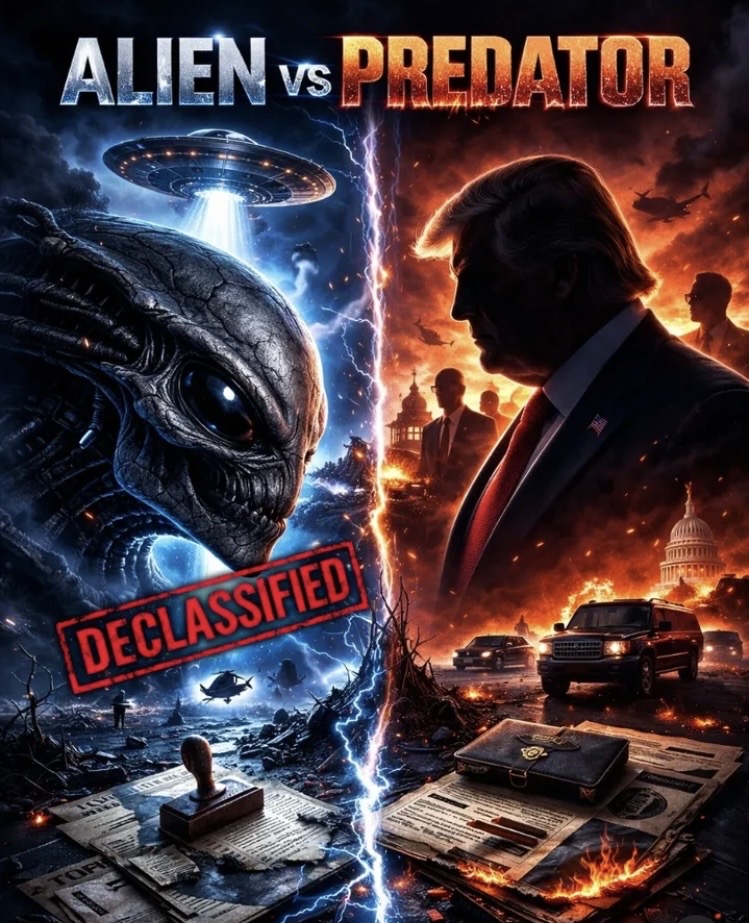
A few movies I’m really looking forward to are Steven Spielberg’s “Disclosure Day” and “Godzilla Minus Zero.” I’m also excited about Ryan Coogler doing his own “X Files” TV show. (MUST. MANIFEST. WRITING. FOR. THIS!!!) Perhaps I’ll be writing a sci-fi TV spec script in the near future.
So, by now maybe you’ve heard about President Obama answering a question on aliens being real. When Trump is asked about it instead of saying ‘no comment’ he launches into how Obama shouldn’t be mentioning classified information. So, you’re telling America there is something there? And now Trump says he’s releasing a lot of classified files on UFOs and UAPs, aliens, etc.
Which ‘D’ word are we getting? Disclosure or Distraction?
So far, 2026 has been a total shit-show! It’s scary! We need stories to help us get by. Human stories. Funny stories. Even love stories.
Another screenplay of mine I’m still working on is about two comedians sharing a similar schtick about relationships. It’s called “My Soulmate Died at Birth.”
One of my guilty pleasures is “When Harry Met Sally” directed by Rob Reiner. Reiner was so talented. “The Princess Bride,” “Stand By Me,” “Misery.” That’s just a few titles.
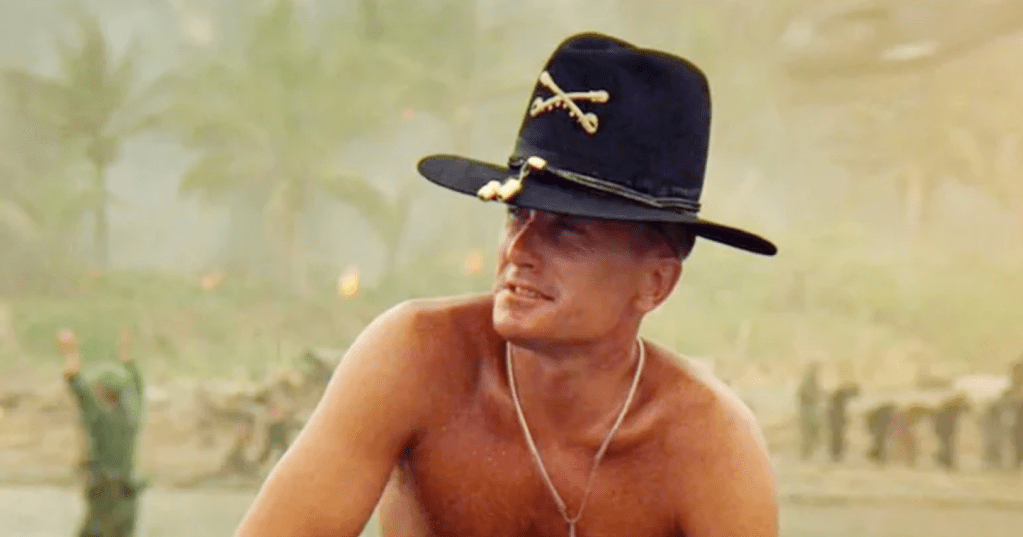
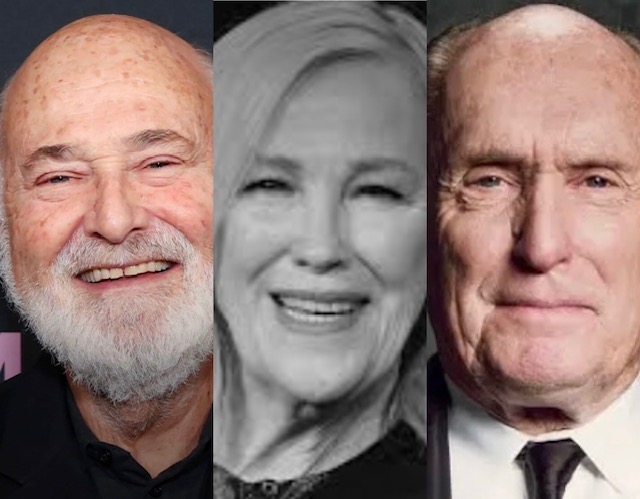
Robert Duvall (“The Godfather,” “Apocalypse Now”) and Catherine O’Hara (“Beetlejuice,” “Home Alone,” “The Studio”) are two great actors that made such an amazing impact. I share a lot about writing, but without actors and directors stories would not come alive.
“I like writing because you can make things happen and turn out the way they never do in real life.”
– Rob ReinerCreatives need the support of friends, family, fellow creatives and anyone who’ll listen to our madness.
Here’s to making 2026 the best it can be!
Share this:

Ross Goes to Austin (Film Festival)!
Time for a Reset!
The Austin Film Festival is just the place.
Hello Friends, Family & Associates,
On Wednesday, October 22, 2025, after two years of reading screenplays and writing coverage for the Austin Film Festival, I finally decided to take the leap and attend the festival. By reading many scripts and earning points, I acquired a Conference Badge. That went a long way to being able to afford to go to Austin. One has to consider flights, hotels, and food.
Wednesday: I’m on a plane
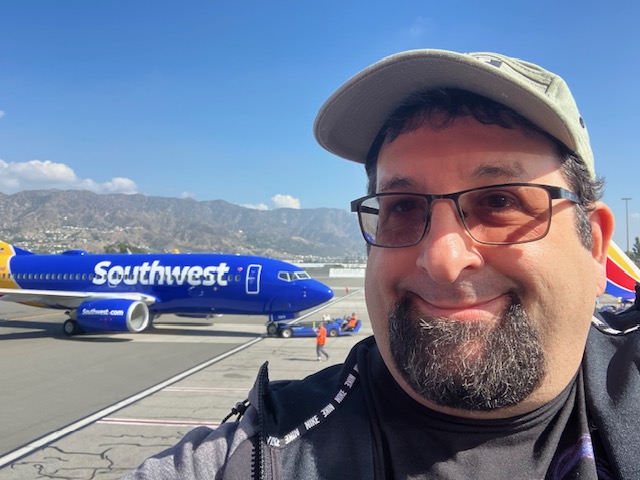

Our flight had one stop in Phoenix, Arizona. There was a change of plans and planes when we landed. So, we had to go inside the Phoenix Airport to our gate. Phoenix is a very hot place. Imagine if the airport had NO AIR CONDITIONING? UGH! (Apparently, in Phoenix, they ruled out air conditioning because of the Freon being released into the air, messing with the environment. Oye.)
The hotels in Austin are very expensive. Even with the AFF discounts, the hotels were still too costly. I lucked into a loft situation with some fellow writers staying right in the heart of Downtown Austin and in the middle of all the AFF festivities.
The drive from the airport to the Littlefield Lofts was about 20 minutes. The Uber driver dropped me off in front of a building named Littlefield. Unfortunately, the building I was staying at, Littlefield Lofts, was across the street. It was 10:30pm. I knew there was a small black box on a wall beside the Gold’s Gym. After circling twice, I managed to locate the little black box. PHEW!
My goal the first night was to get my hands on my Conference Badge. Goal achieved!
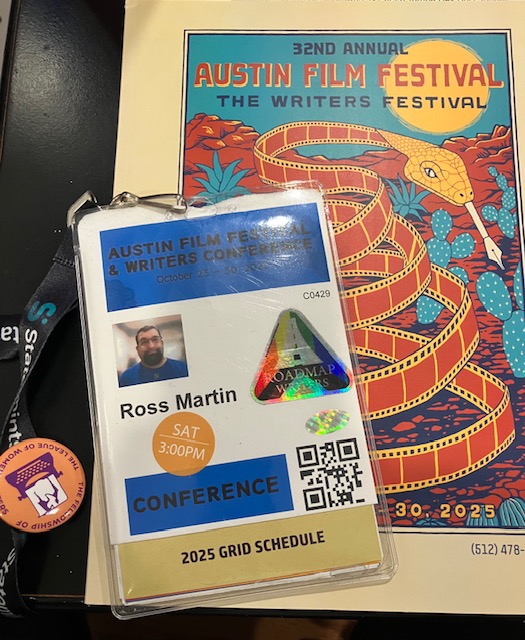
I was so exhausted from my trip. I didn’t want to have to walk far to acquire my badge. I checked my Google Map app. Great! It was a 5-minute walk to the Omni Hotel.
As soon as I entered the registration area, feeling like a zombie, I heard someone call out, “Ross!” It was Paige Parker, the AFF Script Manager. It was a nice moment of recognition and very welcoming to connect with someone I knew through email and Zoom meetings.
Thursday:
Breakfast With Roadmap Writers
Roadmap Writers has been a huge indirect addition to the Austin Film Festival. They are a screenplay platform with resources on their website for rewrite clinics, pitching reps and Zoom meetings with industry insiders. Roadmap held numerous mixers throughout the week, often around food.
On Thursday, October 23, Roadmap hosted a breakfast at Halcyon Coffee. I knew that one member from each of my small writers groups would be attending. I invited them to this breakfast. Sarah Angell is from Canada. Troy Mann lived about an hour or so from Austin. It was surreal to meet them both in Austin.
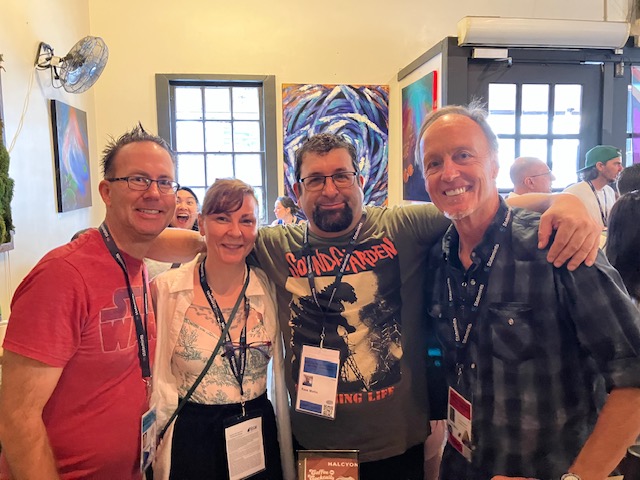
It was also great meeting some of the Roadmap staff. I was familiar with some of them.
As time passed, the coffee shop filled up with writers. There were writers I knew from a monthly Zoom meetup, hosted by Collin, called #VHH or #VirtualHappyHour. Collin is also one of the guys I was staying with.
I also reunited with a mutual friend, Brandon Walter, from whom I hadn’t seen in over a decade.
It was the best way to kick off my AFF adventure! This was even before the first panel on AFF Opening Remarks.
That afternoon, I attended a panel called ‘Your Second Act: Breaking In Over 40.” There is some ageism in Hollywood, but really, it comes down to your screenplay.
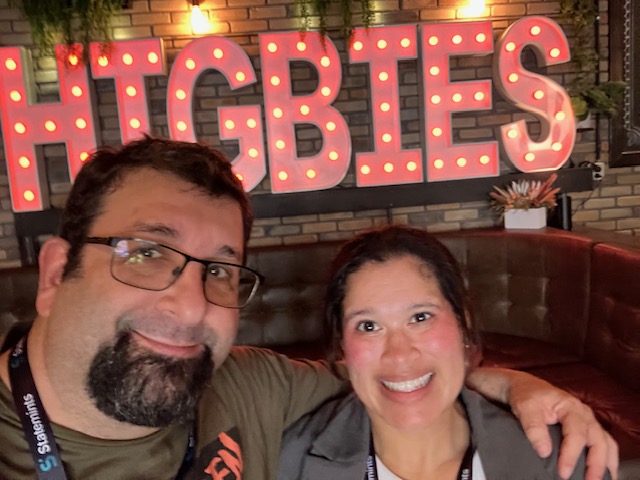
From 4pm to 5pm, I was at the Reader Happy Hour at Higbie’s. I hung out with Paige Parker, the Script Manager, (Below) and finally met the Script Director, Grace Donaldson. I had known Grace for two years, but only online.
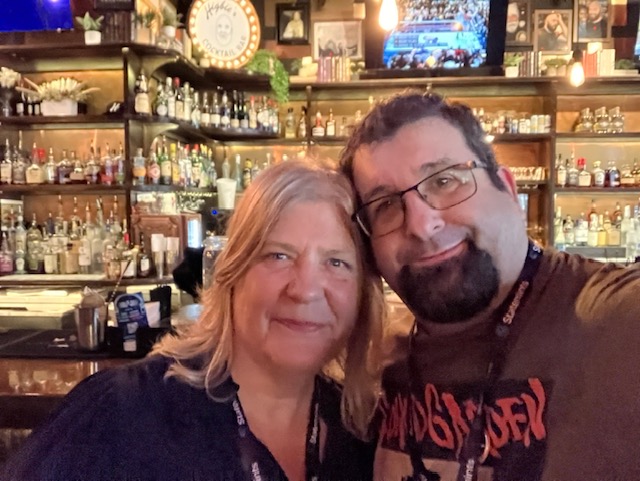
At the same mixer, I met Carolyn Carpenter (below) for the first time in person, too. Carolyn is an instructor for the Hollywood Gatekeepers, an online course I took on script reading.
It was early evening and I had not had lunch yet. You get caught up going from panel to panel and can be out of reach for food. Brittney Coon is both a reader and a screenwriter. We decided to grab some fast food, but took our time. Brittney (below) is from Phoenix and was on my plane, but we did not know each other until Austin.
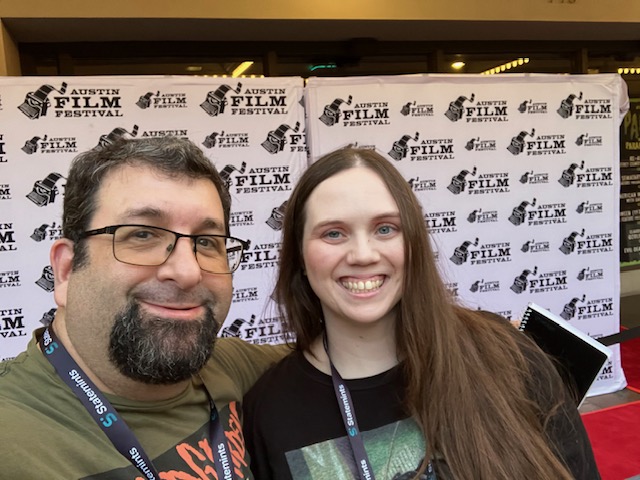
Friday
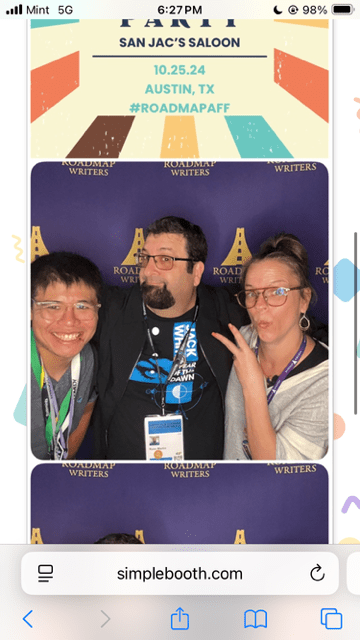
My Friday, October 24th, started with a panel titled, ‘Meeting a Manager.’ It was all about seeking representation. It was great that Jason Lubin of First Story Entertainment was on this panel, as he was going to be doing a roundtable with Roadmap on Saturday that I was attending. I got a preview of what Jason was like.
A term was mentioned about meeting other writers in the same situation: Lateral Networking. That resonated and stuck with me the rest of the week.
The next panel I planned on attending was ‘Everything Everyone Else is Telling You is Wrong.’ I wasn’t going to make it so I pivoted to seeing Michael Ardnt’s panel about developing first acts. What if the panelists in ‘Everything Everyone Else is Telling You is Wrong’ would give wrong advice?
Michael Ardnt’s presentation at the Paramount Theater was sensational! It had visuals and great examples on the movie screen. I’ll have to check out his website, and so should you. If an attendee misses a panel, there are supposed to be replays available at some point.
Another night. Another Roadmap party. This one took place at the San Jac’s Saloon.
John August and Craig Mazen held a live podcast of Script Notes from 9pm to 11pm with special guests. It was a fun event.
I did take some pictures. Out of respect for AFF not wanting pictures taken of any of the panels, I’m saving those for myself.
Saturday:
A Day of Roundtables
On Saturday, October 25th, I decided to sleep late because I hardly slept the first two nights.
This is my day of roundtables. The first one was with literary manager Jason Lubin through Roadmap Writers. There were about twelve of us writers doing a quick pitch to introduce ourselves, our screenplays, and ask Jason a relevant question. About eight writers went before me and some of them had some crazy stories, some of them supernatural. I felt more comfortable about what I was going to pitch because my story is out there.
These days, I’m branding myself as a sci-fi feature screenwriter. It’s suggested that your personal statement relate to the genre and story you’re pitching.
If you didn’t already know, I saw a UFO when I was fifteen years old. 🛸
My pitch went well. My question at the end was about querying managers and producers. When you have 3 or 4 scripts close to being solid, should you query? Jason was adamant about having a solid script to query with.
Another panelist during the week suggested querying to create relationships.
I just have to keep rewriting until I have a SOLID screenplay. It’s been over 30 years. What’s another year? (I’m 55, people.) 🙄
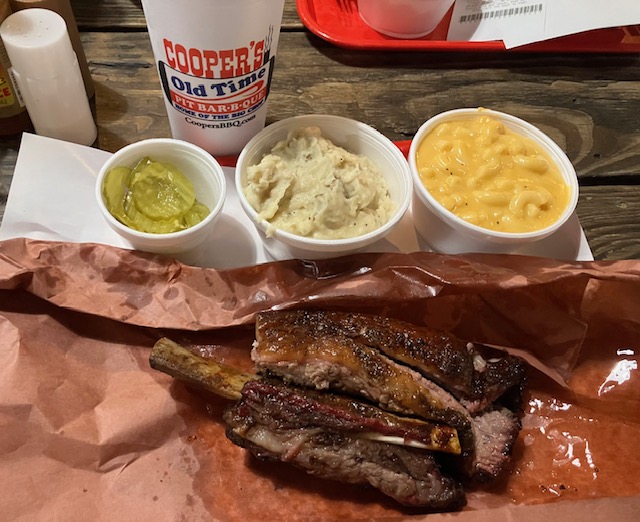
After a nerve-racking time pitching a literary manager, it was time to stuff my face! I was craving BBQ, and Roadmap Writers were doing a get-together at Coopers Old Time BBQ. YUMMY!
Good food! I met more people. NEXT!
I had to race to the next panel. I didn’t think I was going to make it because people stress to be early if you want to get into a popular panel. My next panel was Christopher McQuarrie and Rian Johnson discussing time travel in movies. It’s the one panel I wanted to be at. I made it…barely. I must have used The Force.
Jon Concepcion, who got Rian to sign his “Last Jedi” Blu-ray, posted on one of the WhatsApp AFF groups that Johnson and McQuarrie were at the Stephen F. Austin Hotel. So, I left my loft and headed there. Just as I arrived, I spotted McQuarrie for a moment, and he soon vanished.
Rian was heading towards the stairs to leave. I was able to briefly say hello and shake his hand. It didn’t hurt that I was wearing my Skywalker Ranch tee shirt.
Below is a marketing stunt for the screening of the feature film, “Christy” starring Sydney Sweeney. Sweeney was awesome! I saw the film back in Los Angeles.
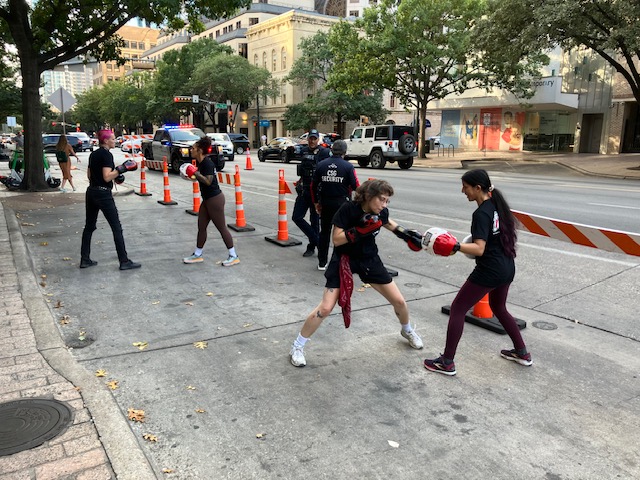
Round 2 As in Roundtable 2
I only signed up for one official roundtable with AFF. Andrew Kevin Walker (“Seven”) was one of the speakers and the reason I chose that roundtable. I arrived early and was first in line. I ran into Viki Solis whom I met days earlier. She, too, was excited to meet Andrew Kevin Walker.
There were probably 8 or 9 speakers for each roundtable. Upon entering the room, I did not see Walker. You never know if speakers have to cancel last minute.
So, I sat down at an empty table. My thought was whoever I got, I’d be happy with. Nadia Abass-Madden (“911”) sat at our table. I was thrilled as I’ve met Nadia before and am Facebook friends with her. It was a great way to reconnect.
Somehow, I sat at the perfect table because I noticed Mr. Walker finally entered and sat at the table behind us. This meant that when the first session ended, the panelists would get up and move clockwise to the next session and Walker would move to our table.
Andrew Kevin Walker did not disappoint. He answered some questions I had about his screenwriting process and approach to outlining. Walker was very down-to-earth and easy to talk to. Viki got Walker to sign her “Seven” script.
The third and last speaker was Virgil Williams (“Criminal Minds”). Virgil was intense. I asked him about the research done on the show and how he was able to write about dark topics involving sexually assaulted and murdered women and children. Virgil was very emotional. He reached his limit on the show and had to move on. He stressed that the work can affect your mental well-being.
Saturday night was simply a night to hang out at the Stephen F. Austin and Omni Hotels. Lots of people were partying at both places.
I hung out with some members of an old writers’ group, Deadline Junkies. I ran into Harim Sanchez, whom I first met earlier in the year at the Slamdance Film Festival. After going back and forth between these two hotels, I made the decision to remain at the Omni since the sky opened up and started raining.
Sunday: Last Day
Sunday morning started with donuts at Voo Doo Donuts. Fun place.
The first panel for me was The Writer Producer Relationship with Christine Vachon and filmmaker Celine Song (“Past Lives,” Materialists”). I ran into Taylor Coriell (above) who had a short film, “Ladylike” playing at AFF.
Song talked about how good the crew was to her about being a novice filmmaker. They helped Song feel comfortable, answering her questions.
What Song got from Vachon was no bullshit. If a scene was too much for the budget, Vachon would inform Song to think about other ways to tell her story.
Closing Remarks with Shane Black
Shane Black (“Predator,” “Lethal Weapon,” “Kiss Kiss Bang Bang”) has been giving closing remarks for AFF for many years. After attending the panel, I can understand why.
Black was no-holds-barred and off the cuff. Black humbled himself and brought himself down a level to all of us struggling writers. Black shared how he had plenty of troubled times as a writer.
It was a very inspiring way to finish my first experience with the Austin Film Festival.
Goodbyes
Although this section is about goodbyes, I finally got a chance to meet up with fellow Deadline Junkie, Nate Russo at the Stephen F. Austin Hotel.
Sarah Angell met me there. Nate had to leave. Sarah and I went to grab a bite to eat. Then I returned to the Stephen F. Austin Hotel for more goodbyes.
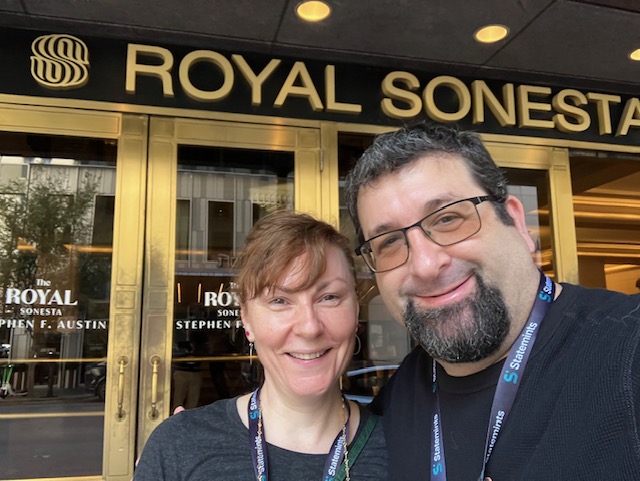
Andrew Kevin Walker saw that I was standing with my little suitcase, as I had been rolling it around all day. He said goodbye and wished me a safe trip back.
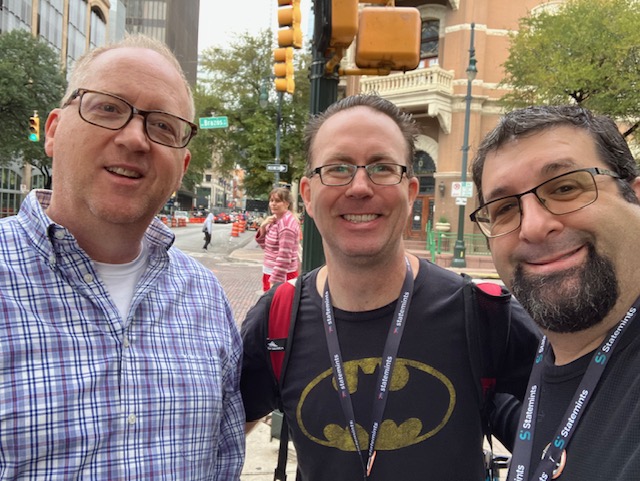
My loft mates were awesome! Above are Dan Gorski, Collin Lieberg and me. Jim Wurst, not pictured, was in the roundtable I had with Jason Lubin.
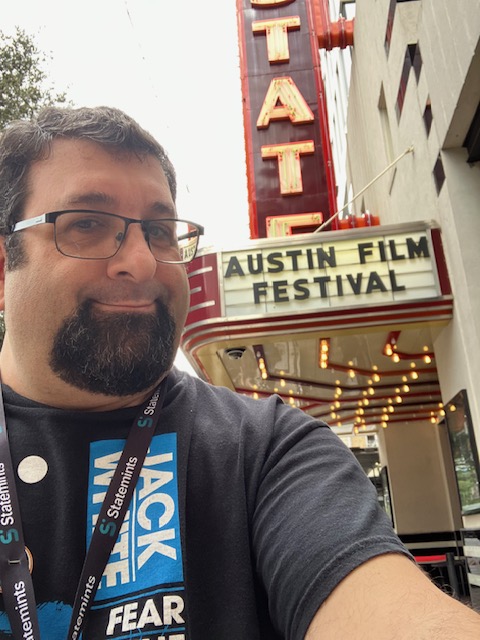
A screenwriter doesn’t need a screenplay to place at AFF. You can get so much out of simply attending the conference.
Stay Weird, Austin! Until next time!
Below is a video I edited with more pictures and footage. Enjoy!
Share this:

Set Mom is 80!
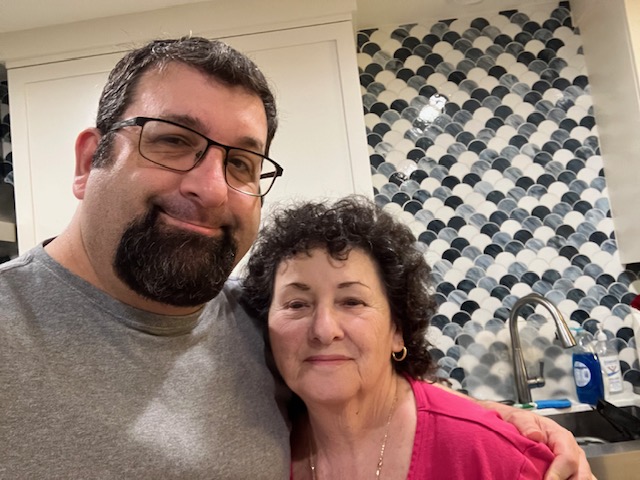
It’s May 2025, and we just celebrated Mother’s Day. Are we done celebrating Mom? We’re just getting started. After all, my mother, Clara, turns a whopping 80 this Wednesday, May 14th. 80 years! WOW!
When I was a kid, my mother encouraged me to follow my heart and dreams. For me, I was into drawing early on. And then I added quotations for comics I drew. I wanted to tell my own stories.
When we had family over for Thanksgiving and the guys were playing football in the backyard, I’d rather watch the monster specials on TV. Godzilla and King Kong!
As an older kid, short story writing became my thing. I took some creative writing classes TWICE in high school. I also took a film appreciation class TWICE!
At the University of Hartford, I took creative writing courses and wrote more short stories. During my senior year, my dad became a part-owner of a textile company in Los Angeles, CA. He headed out West, and so did my imagination. Eventually, I would join him along with my mom and my sister.
During that last Summer in New York, I picked up some screenwriting resources and started writing my very first screenplay on a WORD PROCESSOR! Yeah. That’s right.
That first screenplay wasn’t good, but I finished it when I reached Los Angeles, CA. Both my parents were extremely supportive. My dad thought I might be interested in working with him, but the more I worked on the sets of TV pilots and feature films, the more likely I’d pursue the film industry.
In 1994, I decided to attend film school at Columbia College-Hollywood. In addition to my main pursuits, screenwriting and directing, I learned about cinematography, production design, editing, and acting. I wrote, produced, directed, and edited short films on 16 millimeter. My mom was often on set helping out wherever she could. I gave her the honorary credit as Set Mom. She was every crew member’s mom. She prepared fruit salads and vegetable trays.
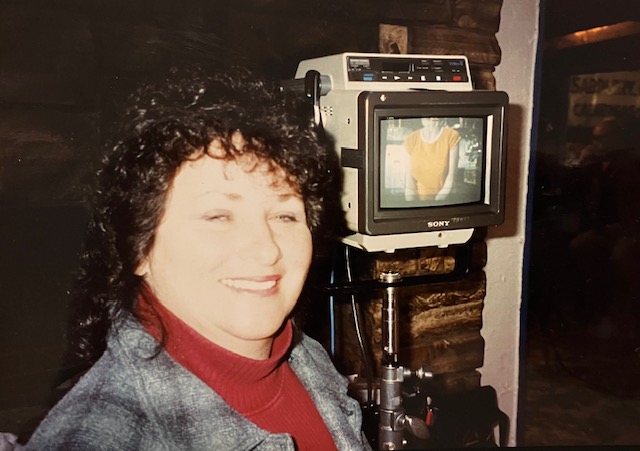
“The Turnaround” was my epic thesis short film shot on 16mm. The short won the “Best of the Fest” at the Rochester International Film Festival in Rochester, NY. The film screened at the George Eastman House. My parents could see my talent, but they also observed the difficulty in breaking into the business.
My parents assisted in hosting short film showcases at our house in Calabasas. I’d meet filmmakers at various film festivals and invite them to show their films. It was a fun way to network, and it was a BLAST!
After film school, the focus was on co-writing a feature screenplay and film, “Rubbernecking” with Sean Kinney. Sean and I searched vigorously to locate investors. Even when we attached investors, they fell through for whatever reason. Some investors dropped out right before the shoot.
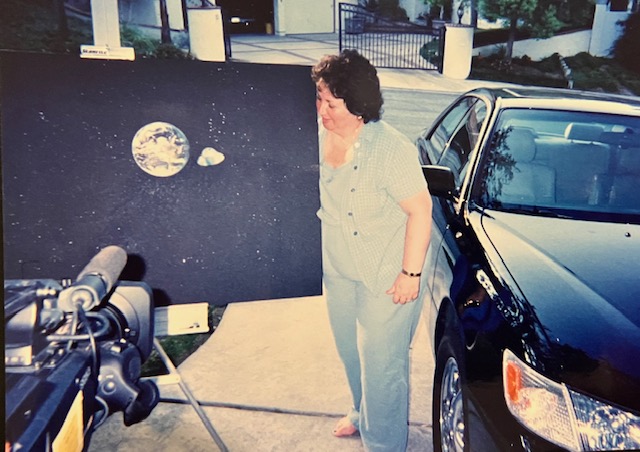
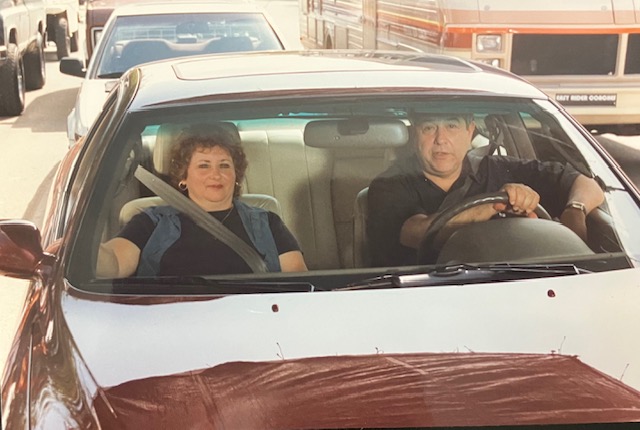
My parents stepped in to save “Rubbernecking” and got the film out of production traffic, though it was a film about people stuck in traffic. My parents were natural featured extras, complaining about the traffic ahead.
Completing the film was a major accomplishment. Finding the right editor became a challenge because part of the film was shot in 35mm, and another part in High Definition. It was the late 90’s, and HD was all new.
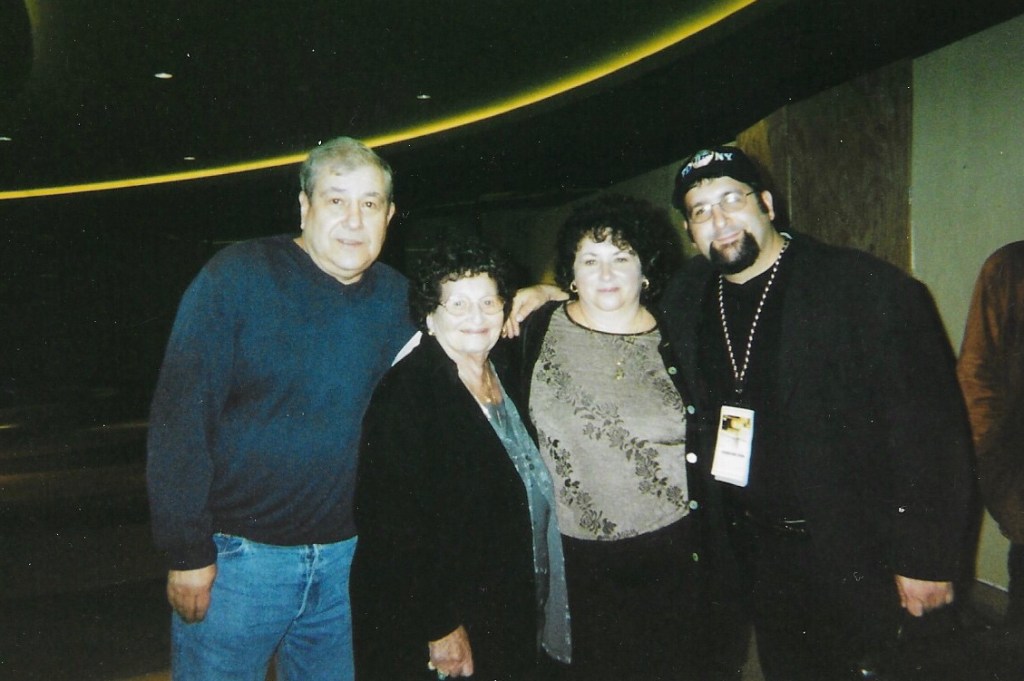
The film played at a few film festivals, including one in New York. Some of my relatives attended. The edit of “Rubbernecking” was a constant battle. It’s no wonder that Sean and I became film and video editors. We were never completely happy with the cut. “Rubbernecking” was shelved. Years later, we still mull over doing something with it.
My parents continued to support my creative career as I struggled to find my way. Somehow, I found myself editing the feature film, “War of the Worlds 2: The Next Wave” that can currently be seen on Tubi. But my editing career was not thriving.
So, I tried teaching English in South Korea, but that didn’t work out. So, I landed in Las Vegas, Nevada, where my parents were living at the time. I tried to assimilate into the Las Vegas film community. I got involved in various areas. I wrote concert reviews for Vegas Seven Magazine on artists like Duran Duran, ZZ Top, and Matisyahu. The last short film I produced, “You Are What You Eat” was filmed at my parents’ house in Las Vegas.
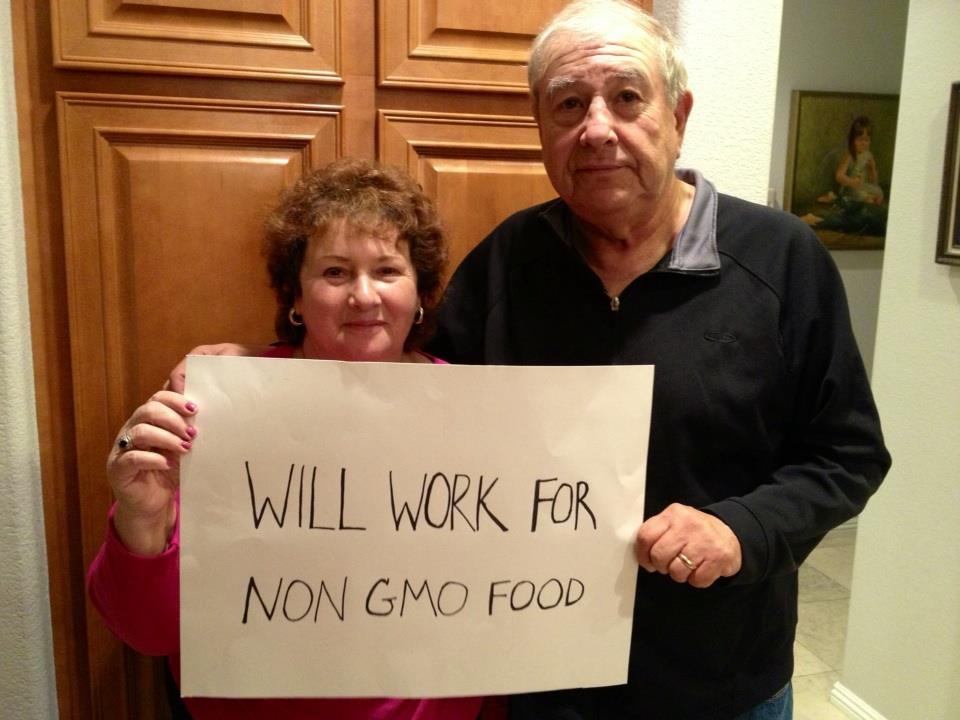
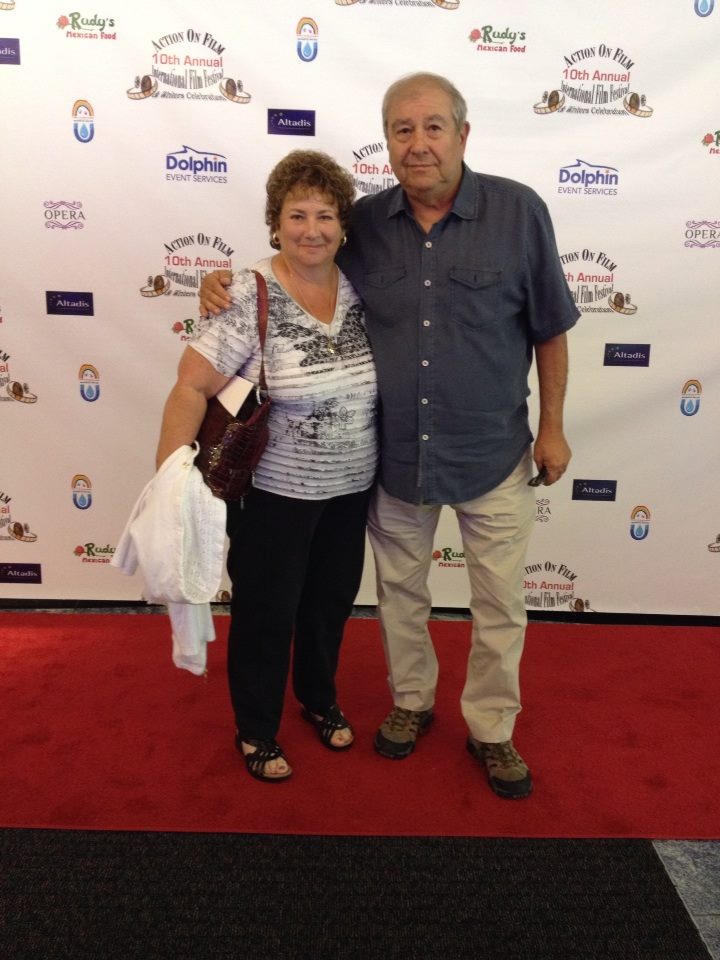
My parents were there again to help me put on a film festival. The Social Media Film Festival was a great experience. The main event took place at the Mirage Hotel and Casino, which doesn’t exist anymore.
In 2013, Hollywood was pulling me back to Los Angeles. I took some regular jobs. Eventually, I took a vault job at Fotokem in Burbank. Five years later, I was laid off due to the pandemic. I took some additional post-production jobs as things started to open up again.
I needed to get back to writing, BIG TIME. Since editing wasn’t working out for me, I dropped it and my last post-production job. The pandemic had me going down rabbit holes and meeting interesting people on an app called The Clubhouse.
My parents had moved back to Los Angeles to be closer to me and my sister, who now had three kids. A part of the reason they moved back was that my dad’s health was deteriorating. My father passed away in December 2020.
The year 2021 became a dark time. I needed to write something light. So, out of left field, I wrote a rom-com called “My Soulmate Died at Birth.”
Along with quitting my last post-production job in 2023, I moved in with my mom in Thousand Oaks, CA. She needed company and I needed a place to figure out my life and career. It’s a work-in-progress.
Often, I had written in various genres, but something else was calling me – SCI-FI! I had already written a sci-fi script called “Rivals” before the pandemic.
I got the idea for “The Battle of Los Angeles – 1942” from the time I spent going down rabbit holes. Mom was gracious as usual to let me hold a first draft reading at her house with some actor friends. I remind her how grateful I am in the following You Tube video.
I’m doing what I can to go all in on screenwriting. That includes script reading. I’ve been reading screenplays for the Austin Film Festival since last year, 2024. I’ve had a few clients and hope to build a script consulting business of sorts.
The film and TV business seems weak right now. You hear about some script sales, but for the most part, breaking in as a screenwriter is looking bleak. Are the studios buying anything original or are they just remaking movies with AI? I’m actually learning Midjourney, an AI app so I can at least create some movie posters for my screenplays. It’s not enough to write a screenplay, you have to market it too. Who knows what the future holds?
Whatever I end up doing the rest of my life, I know my mother will support me. She’s the best!
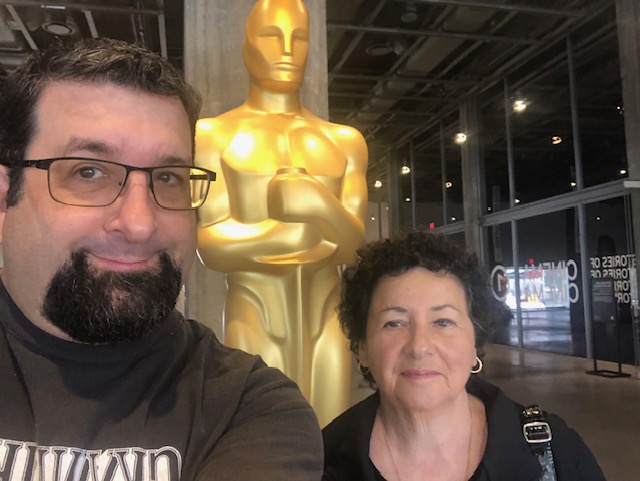
Happy 80th Birthday, Mom! I LOVE YOU!
Share this:

MAYDAY! Coverfly Shutting Down!
Cover-Fallen
| Dear Film and TV Industry, Over the past five years, I’ve been improving my craft of screenwriting. I’ve been writing for over 30 years, and the struggle has been long and tough. While pursuing other creative roles like directing and video editing, screenwriting has always been at the center of my passions. At times, sometimes for a whole year, I suffered from writer’s block or impostor syndrome. |
| It’s tough being a screenwriter, especially when unproduced. You take classes and watch webinars, listen to successful writers and development people share tips and trends, but where do you stand as a screenwriter? How do you gauge your progress? |
Coverfly
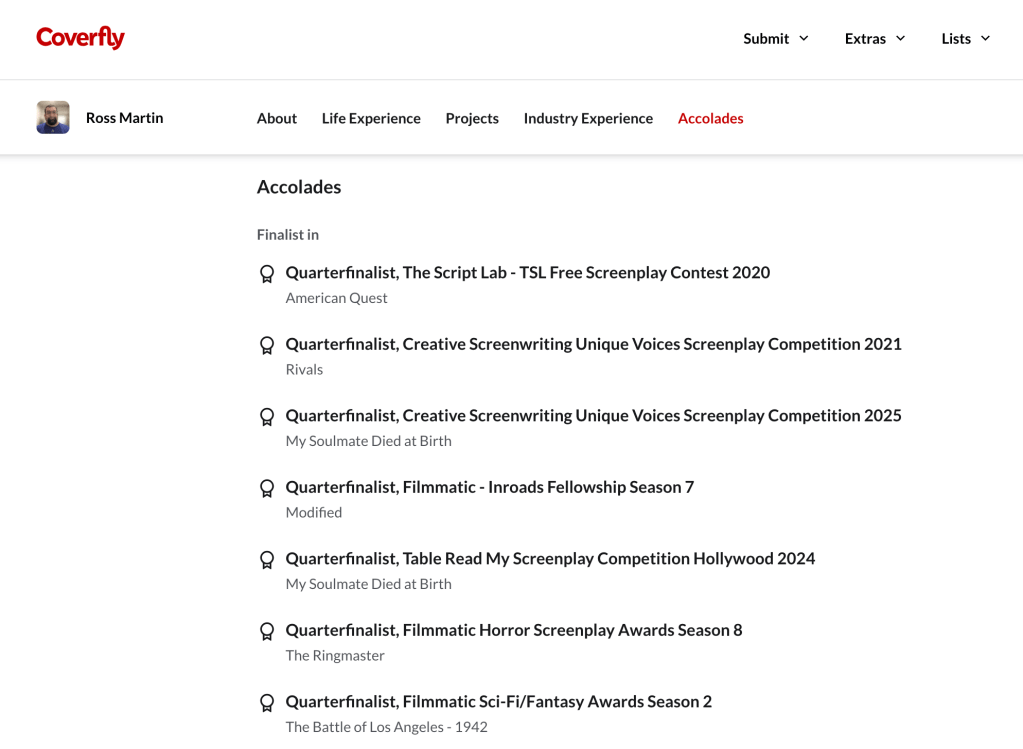
Starting in 2020, my feature-length screenplays started to place as Quarter Finalists. Coverfly was not just a platform to post your scripts. You could see first-hand how well your script was doing. Although I never made the Red List, the top tier, it gave me something to shoot for. Coverfly kept a record of your submissions and gave out badges when your script received an accolade. Even when your script didn’t place, but scored high enough, your Coverfly rank could improve a little bit.
When it’s hard enough to gain attention as a writer, every little boost helps.
Below is what I have to show for the last 5 years thanks to Coverfly.
Peer-To-Peer
Coverfly had a free peer-to-peer option for those seeking feedback and don’t have the money or resources to swap with other writers. I used this a few times for feedback. As a budding script reader, reviewing other writers’ scripts was a good practice.
Writers shared their ‘Coverfly profile’ on their social media accounts. Industry people could check out profiles showcasing a writer’s bio., industry and life experience, projects, and script accolades. It’s unclear to me how many industry people were checking out profiles.
It’s a mystery to me why and how this wonderful service needed to go. It doesn’t seem to be bought by another company. Cast & Crew owns Industry Arts. Industry Arts had several screenplay and coverage companies under their label that were shut down earlier this year: ScreenCraft, WeScreenplay, The Script Lab and Launchpad.
What happened? It’s about business and money. Either way, screenwriters have to keep finding ways to stand out and get hired.
There are other screenplay platforms. Some company needs to build another platform where screenwriters can post their scripts and find resources so they can reach their writing goals.
Script Reader
This past week I read a screenplay and wrote coverage for a client on Talentville, another screenplay platform. You can check Talentville out at https://www.talentville.com/
Last year, I read screenplays and wrote coverage for the Austin Film Festival. I’m reading again this year.
I also have a script reading gig on Fiverr.
“Ross was very prompt and quick to respond. Very knowledgeable and professional. He provided me with an analysis that went above and beyond my expectations, providing me great feedback to help take my screenplay and future ones to the next level. Invaluable information, that I greatly appreciate!”
– Maurice S. (Client on Fiverr)
Check it out! Tell your writer friends! https://www.fiverr.com/s/qD6Qo5d
May the 4th be with all those writers out there struggling to find their way and to all of you whatever you do!
Share this:


Does 2025 make you want to SCREAM?
Screenwriters, does 2025 make you want to SCREAM?
Go ahead. LET IT OUT!
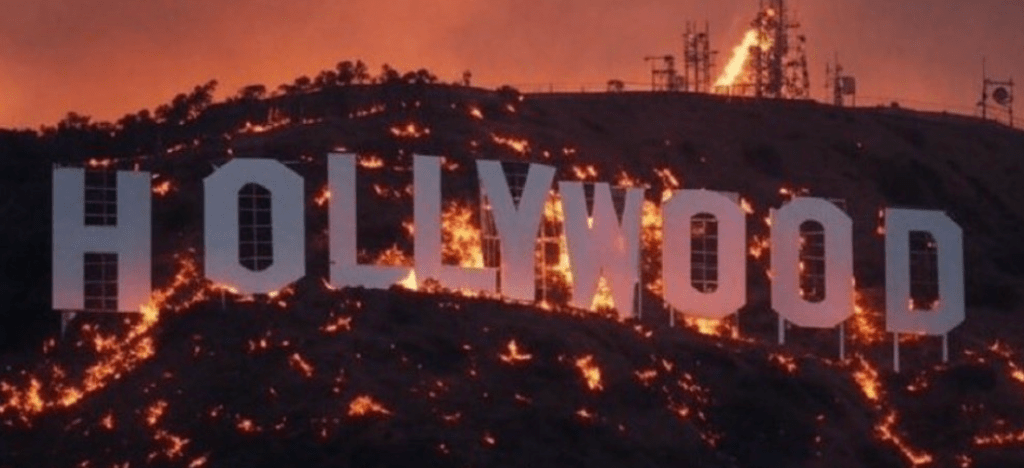
The past five years have been brutal for the film industry. It’s like one fiasco after another. Covid and the Strikes did some real damage. And just when it looked like things were starting to turn around with a few good spec script sales Hollywood burns to the ground. It sure felt like it. (The photo below is a fake.)
Hollywood Burns to the Ground?
For screenwriters looking to get attention on their scripts, things are looking even more bleak. To acquire representation or attach a producer, screenwriters often submit to screenplay competitions.
In February 2025, Industrial Arts decided to consolidate a bunch of their smaller screenplay platforms including ScreenCraft which also had fellowships. Additional platforms are Launch Pad and WeScreenplay, a source for coverage. Thankfully, Industrial Arts is not doing away with Coverfly. Coverfly is one of the top platforms to showcase your screenplay, discover and enter competitions, and an overall great resource.
Take a moment to BREATHE.
Are you calm? Now, I can serve up the next bit of screenwriting drama. In late March 2025, The Nicholl Fellowship, arguably the biggest screenplay competition, announced that it will no longer accept submissions directly to its website. The Nicholl Fellowship is associated with the Motion Picture Academy. To enter the Nicholl Fellowship, the Academy provided a long list of universities and other organizations. On that list is another popular screenplay platform, the Black List.
Nicholl Fellowship / The Black List
More detailed information will come out soon. So far, from what I understand, a writer will need to have their script hosted on the Black List for a month during the submission period which will be July and August of 2025. To host your screenplay it costs $30. And there is no further cost to enter the Nicholl competition. Oh, wait. There is one more task. The script must have an evaluation done by a Black List reader. How much are evaluations? $100. Ouch!
If a writer doesn’t have the funds or simply doesn’t want to enter, there are other top screenplay competitions out there. Final Draft Big Break, Script Pipeline and the Austin Film Festival are ones to pay attention to.
Script Reader
Last year, I read screenplays and wrote coverage for the Austin Film Festival. I’m reading again this year. Here is a partial quote from last year’s AFF script manager, Cynthia Cano.
“We were consistently impressed by the level of thought and detail he included in his feedback. He clearly has a goal to help the writers that entrusted him with their work; and though he did not shy away from commenting on what was not working within a script, he always offered encouragement and possible solutions for the piece moving forward. I was very lucky to work with someone as dedicated, communicative, and dependable as Ross over this past summer, and I hope to have the opportunity to work with him again. He is a hard-worker, and a great teammate; anyone would be lucky to work with someone so dedicated to the craft and exudes dedication in everything he does. ”
Other than reading for AFF, I have a script reading gig on Fiverr.
“Ross was very prompt and quick to respond. Very knowledgeable and professional. He provided me with an analysis that went above and beyond my expectations, providing me great feedback to help take my screenplay and future ones to the next level. Invaluable information, that I greatly appreciate!” – Maurice S. (Client on Fiverr)
Check it out! Tell your writer friends!
https://www.fiverr.com/s/WEz3y5d
Break on Through
I feel like I now have a handful of scripts that are ready and/or close to ready. Last year was actually a pretty good year as my scripts placed as Quarter Finalist in some decent competitions. “My Soulmate Died at Birth” placed at Table Read My Screenplay and Creative Screenwriting Unique Voices (2025). “Modified” placed at Filmmatic Inroads. “The Ringmaster” placed at Filmmatic Horror Screenplay Awards.“The Battle of Los Angeles – 1942” placed at a lesser-known Cineplay International Film Festival.
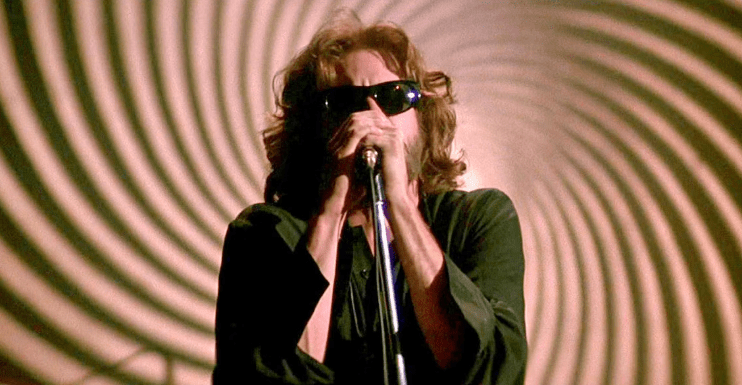
What else am I doing to ‘Break on through to the other side’? (Reference to the Doors in memory of Val Kilmer. Rest in peace.)
What’s a Screenwriter to do?
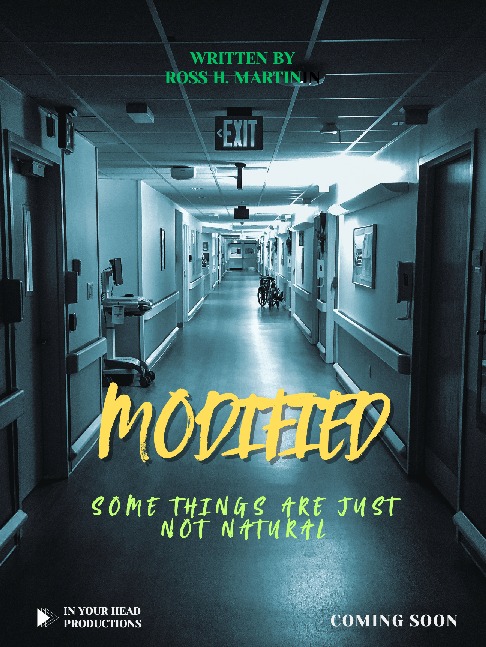
I’ve been playing around with Canva to create movie posters. You never know who you meet or what they might want to see as far as screenplay materials.
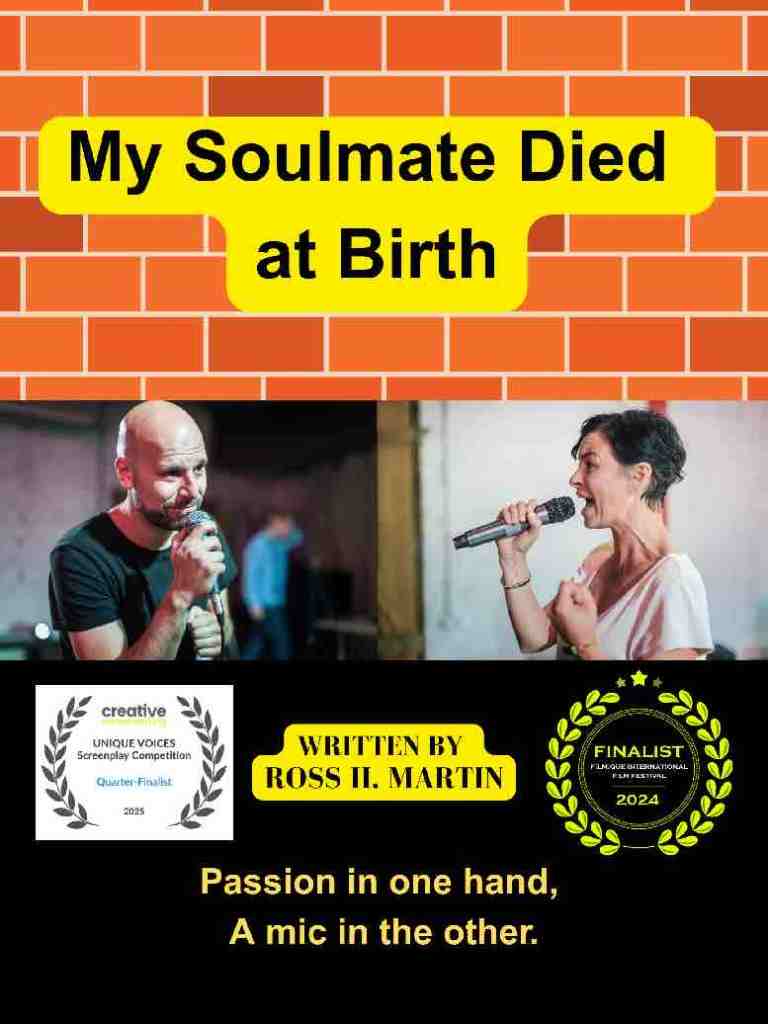
Next, I plan to go further and create pitch decks. Whatever I need to do to move the needle forward.
Speaking of needles, if you have any Doors on vinyl now would be a good time to listen. Really, any time is a good time to listen to the Doors.
Val Kilmer’s vocals singing over the Doors’ songs while recording were so hauntingly like Jim Morrison the rest of the band thought they were Jim’s vocals. In preparation, Kilmer learned 50 Doors’ songs. Kilmer’s performance of Jim Morrison is one of my favorites. RIP Val Kilmer
Val Kilmer plays Jim Morrison in “The Doors.”
Share this:

End of 2024 Push!

The Horror of the Film Industry
Hello Friends, Family & Associates,
It has been a tough time for everyone in the entertainment industry. I’m constantly moving and reinventing myself. Last year, I physically moved in with a family member. The jobs I held in post-production were not advancing my career in any way. The low-pay was not covering my rent and other bills.
Video editing was supposed to be my fallback career to screenwriting and directing. After many years of networking and struggling to land editing jobs, I’m letting go of it for now. I love editing and will continue doing it to market myself.
The Face of Horror
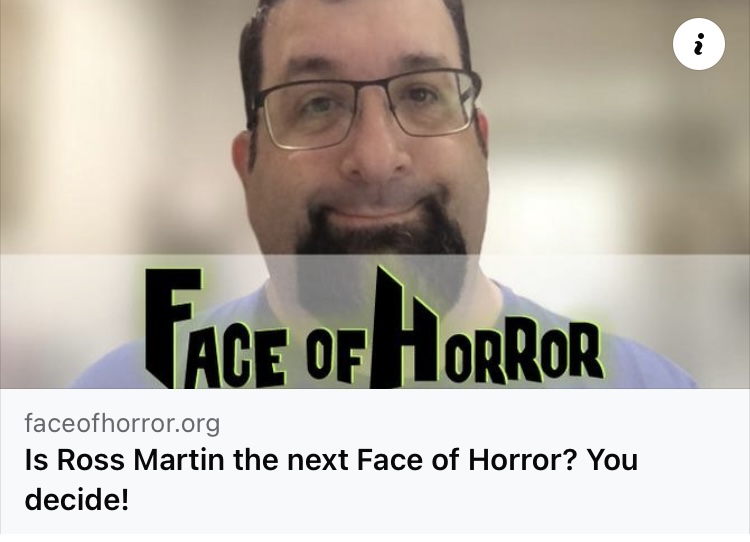
Speaking of marketing, there is this goofy contest to become the Face of Horror. The winner gets to hang out with Kane Hodder, the man behind the Jason mask. You go on a ghost hunt with Kane and there’s a photo shoot, an interview for a magazine, and oh yeah, $13,000!
It’s a popularity contest. The most votes wins. You can vote once a day for free. The horror genre has the most fanatical and dedicated fans. I’m not even a huge horror fan. I do love horror comedy! I saw “Shaun of the Dead” in the theater last night in Dolby Sound and it was magnificent!!! I’m mainly using the contest to help me PUSH MY CAREER! So, please VOTE to help me out.
https://faceofhorror.org/2024/ross-martin

Last year, I took a course on story analysis to become a script reader. In addition to submitting my feature horror screenplay, “The Ringmaster” to the Austin Film Festival, I read scripts for AFF. I read scripts in other categories.
So far this year I have received Quarter Finalist accolades for three different screenplays, “The Ringmaster,” “Modified” and “My Soulmate Died at Birth.” My writing seems to be improving.
Script Reader
Unfortunately, the Austin Film Festival does not pay readers in their first year. I’m hoping to get paid next festival season. In the meantime, I’m looking to create a business in script reading. I’m starting small and using another platform to get my feet wet. So, if you know of any screenwriters looking for feedback please send them to the following link. They could be new writers or anyone looking for feedback on their scripts.
https://www.fiverr.com/s/vvzDjLr
Bold Journey
This blog was part of an email campaign and I thought I’d share it here as well. I hope it inspires you to PUSH for your goals and dreams for the rest of 2024.
To wrap up, here’s a fun little interview I did for Bold Journey Magazine about me and my career. Enjoy!
https://boldjourney.com/meet-ross-h-martin
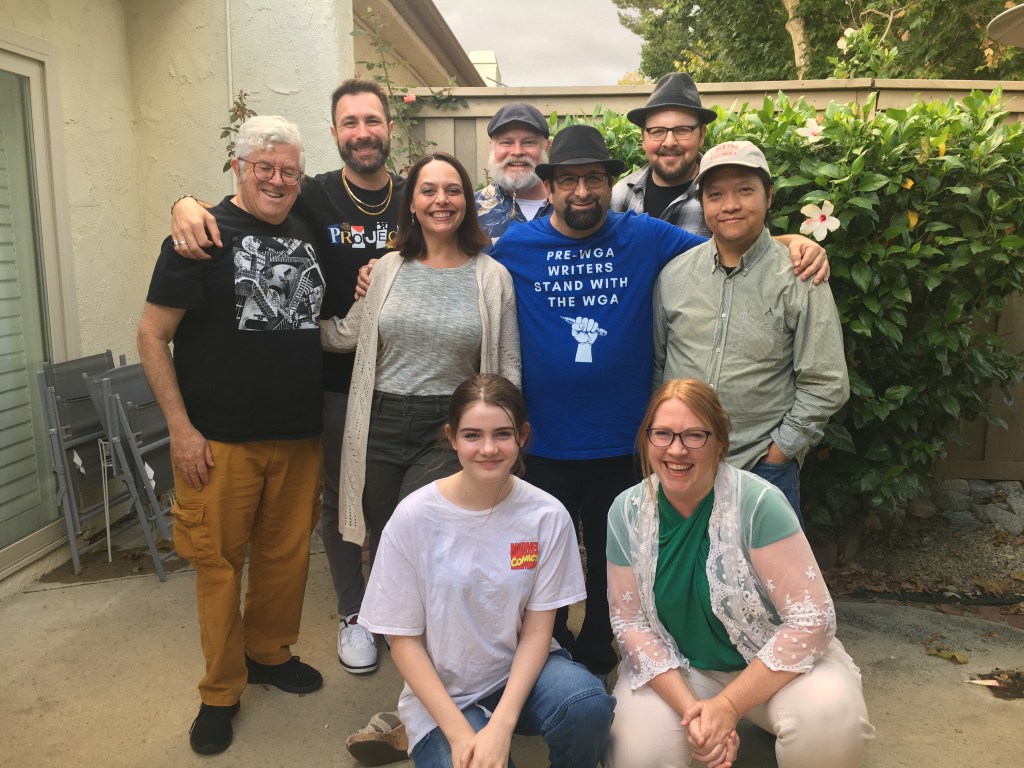
This picture took place on my birthday last year. Some actor friends and one cousin got together to read my first draft of “The Battle of Los Angeles – 1942.” I have since written a second draft.

Share this:


Making Movies Wilder
Born June 11, 1933, as Jerry Silberman in Milwaukee, Wisconsin, he would later change his name to Gene Wilder and become a comedic icon in movie classics “Willy Wonka and the Chocolate Factory,” “Young Frankenstein,” “The Frisco Kid” and “Stir Crazy.” It all started when Gene was a kid. His mother had a heart attack. When she returned home her doctor leaned into Gene and told him never to upset his mother. If anything, make her laugh.
Wilder landed some TV roles before his first film break in “Bonnie & Clyde” playing an undertaker. Director Arthur Penn wasn’t planning on the featured role to be funny, but that’s what you got when you hired Gene Wilder. Wilder met Mel Brooks very early on as Brooks’ wife, Ann Bancroft, was performing in a play with Wilder. When Wilder ran into Brooks backstage, Gene noticed Brooks’ peacoat. Mel said he liked to call it a urine coat. Wilder busted a gut. The two men collaborated, laughed, and became best friends for decades.
Brooks had the idea for “The Producers” when they first met but didn’t have the financing. A few years later, Brooks got the money. The producer of the movie, “The Producers” didn’t want Wilder. He wanted a leading man. Brooks disregarded the producer and kept him from seeing dailies.“The Producers” was a huge hit.
Wilder and Brooks would eventually team up on “Blazing Saddles” and “Young Frankenstein.” Wilder wasn’t initially cast in “Blazing Saddles.” The actor playing the Waco Kid fell ill and could not continue. Brooks called up his muse, Wilder. There may have been a new sheriff in town, but Gene Wilder saved the movie. “Everything Gene did for me was angelic and supreme,” said Mel Brooks on American Masters PBS.
Gene Wilder found great comedic chemistry with comedian Richard Pryor in “Silver Streak.” Another electrifying comedic performance with the masterful duo of two innocent best friends sent to prison for robbing a bank in “Stir Crazy.” The combined comedic stylings and antics of Gene Wilder and Richard Pryor became even more legendary. Wilder and Pryor as Skip and Harry toughened themselves up for prison, saying out loud, “That’s right. That’s right. We bad.” Years later, Wilder and Pryor teamed up a third time on “See No Evil, Hear No Evil.” Wilder is also credited as a screenwriter.
“Willy Wonka and the Chocolate Factory” wasn’t a box office smash due to its edgy, dark telling of a story about naughty, greedy children. The young fans who grew up with the movie and recognized its genius made it a cult classic. Wilder’s Wonka is one of the greatest and most memorable performances. When young Veruca states there’s no such thing as schnozzberries, Wonka explains it to her. “We are the music makers, and we are the dreamers of dreams.” This quote reminds its fans and humanity of the importance of storytelling. Artists and people in general need to keep dreaming big.
Wilder wasn’t just a charismatic, funny actor with piercing blue eyes. He was a comedic visionary. Wilder was playing with the idea of Frankenstein’s grandson, a serious surgeon, wanting nothing to do with his grandfather’s work in reanimating dead tissue. The young Frankenstein and rightful heir could no longer fight this resistance. It was his destiny! In collaboration with Mel Brooks, “Young Frankenstein” was cast with the funniest ensemble; Madeline Kahn, Marty Feldman, Cloris Leachman, Terri Garr, and Peter Boyle as the ‘monster.’ The biggest argument Wilder and Brooks had was whether to include the scene with his character and the monster, sharply dressed up in tuxes, top hats and canes, singing ‘Puttin’ On the Ritz.’ Brooks was more than thrilled to have lost that battle. It’s cinematic comedy gold!
Gene Wilder met Gilda Radner of “SNL” fame on the set of “Hanky Panky.” They fell in love and made the best of their short-lived time together. Radner’s time ran out due to cancer. Wilder found himself in love again years later after doing research for “See No Evil, Hear No Evil.” Karen Boyer was a clinical supervisor at the New York League for the Hard of Hearing. Boyer taught Wilder how to lip-read for his role as Dave who was deaf.
Gene Wilder was 83 years old when he died of Alzheimer’s disease in 2016. “Remembering Gene Wilder” is a documentary and a beautiful tribute to Gene Wilder touching on his magical gift of making people laugh. Not only did Wilder touch the lives of so many artists, but his comedic humanity will live on in his classic movies for years to come. Go see the documentary while it’s still in theaters.
Share this:

Screenplay Feedback
How do screenwriters get feedback?
Congrats! You finished your first screenplay draft. Now what? It’s time for some feedback. It doesn’t matter who you are or what you’ve accomplished as a writer. Everyone needs feedback. There are so many elements that make up a good script; story, structure, format, characters, and dialogue. You may be great in one area, but deficient in another area. Getting feedback is important in improving your script and growing as a writer.
How and from whom do you receive feedback?
Everyone has different perspectives when reading scripts so I would get more than one person to read your script. When common issues arise you then know what to work on in your rewrite. Writing is re-writing.
You may have colleagues, friends, or family members who could read your script and give their best impressions. They may simply sugarcoat the story and not give constructive criticism because they know you, don’t want to hurt your feelings or are simply not familiar with scripts. You want constructive criticism.
Other writers perfecting their craft who may be more knowledgeable about screenplays would be more honest with your script and therefore more beneficial. Even better are readers working in development whose jobs are reading scripts.
Screenwriting competitions give feedback. You might have to pay a little extra, but it may be worth it.
Writers Groups
Writers groups are a great way to get feedback. You’ll receive notes from readers of various backgrounds. It may be beneficial to have readers who specialize in the genre you’ve written your script in. If your script is a horror story, it may be more helpful to have horror writers read it.
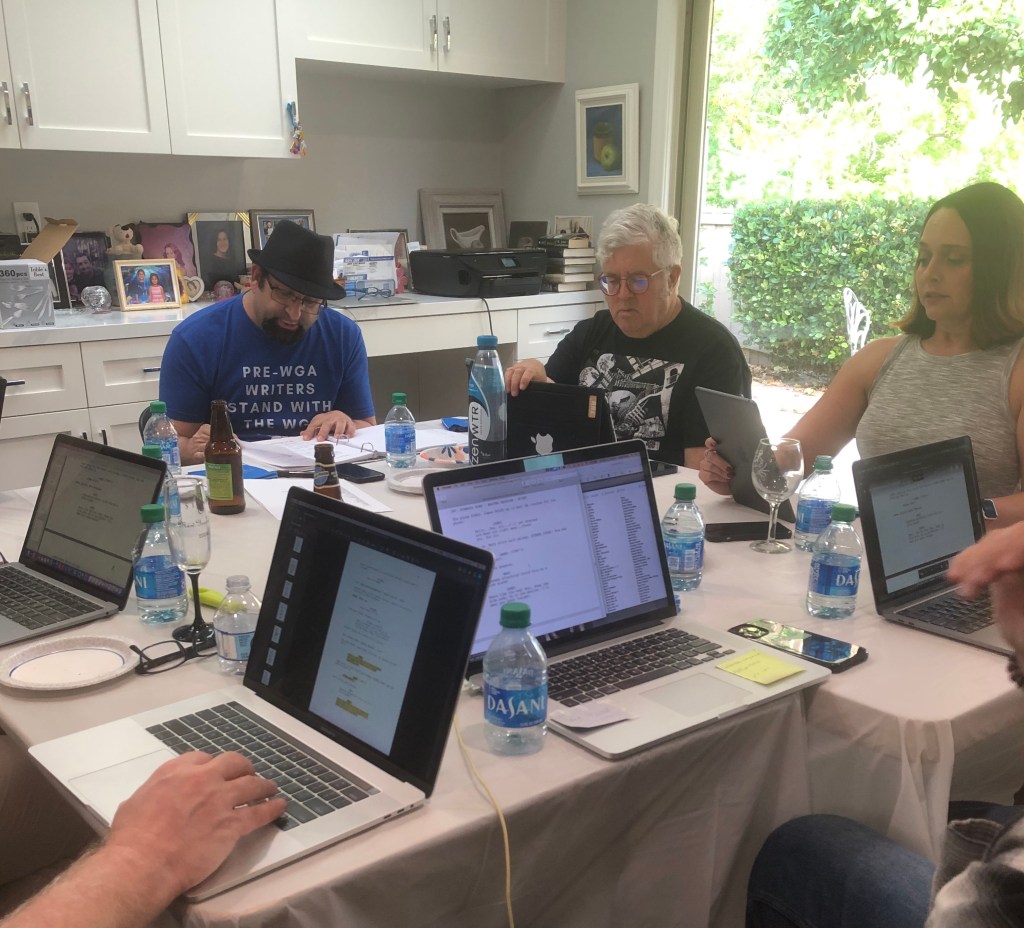
Some writers’ groups involve actors who do cold readings of your script. That way you hear the voices of your characters out loud. This is a whole additional level of feedback. It’s instant feedback. To hear your characters and the dialogue live really shows if you’re on the right track. Do your characters all sound alike? Writers groups can be very supportive.
Screenplay Platforms for Hosting Screenplays, Getting Notes and Pitching
You can pitch your story to development insiders for a price. One screenplay resource platform is Roadmap Writers. You can upload and host your screenplay on platforms to enter contests with savings. Coverfly does peer-to-peer notes. It doesn’t cost anything. They have direct notes too. The International Screenwriting Association or ISA has a low monthly fee to host your screenplay. Stage32 is another platform. Blacklist is a popular platform. You can pay to have your screenplay evaluated.
There are also pitchfests where you pitch to managers, agents, producers, and production companies.
Read, Read, Read!
I highly recommend reading scripts in the same genre. In addition, just read any scripts of any genre. Reading scripts helps regardless of the genre. Read Oscar-winning scripts. Read scripts from the best and most prestigious competitions like Nichols and Austin Film Festival. What’s in those scripts that stands out and shines?
Now, go write!

 In Your Head Productions